Venues · 6 min read
How to choose a wedding venue with confidence
Questions that reveal whether a space works for your people, your plans and your practical needs.
Read the guide →Venues · 5 min read · Updated August 2026
Make an outdoor celebration more comfortable by deciding early what happens if the day is hot, wet, windy or simply different than expected.
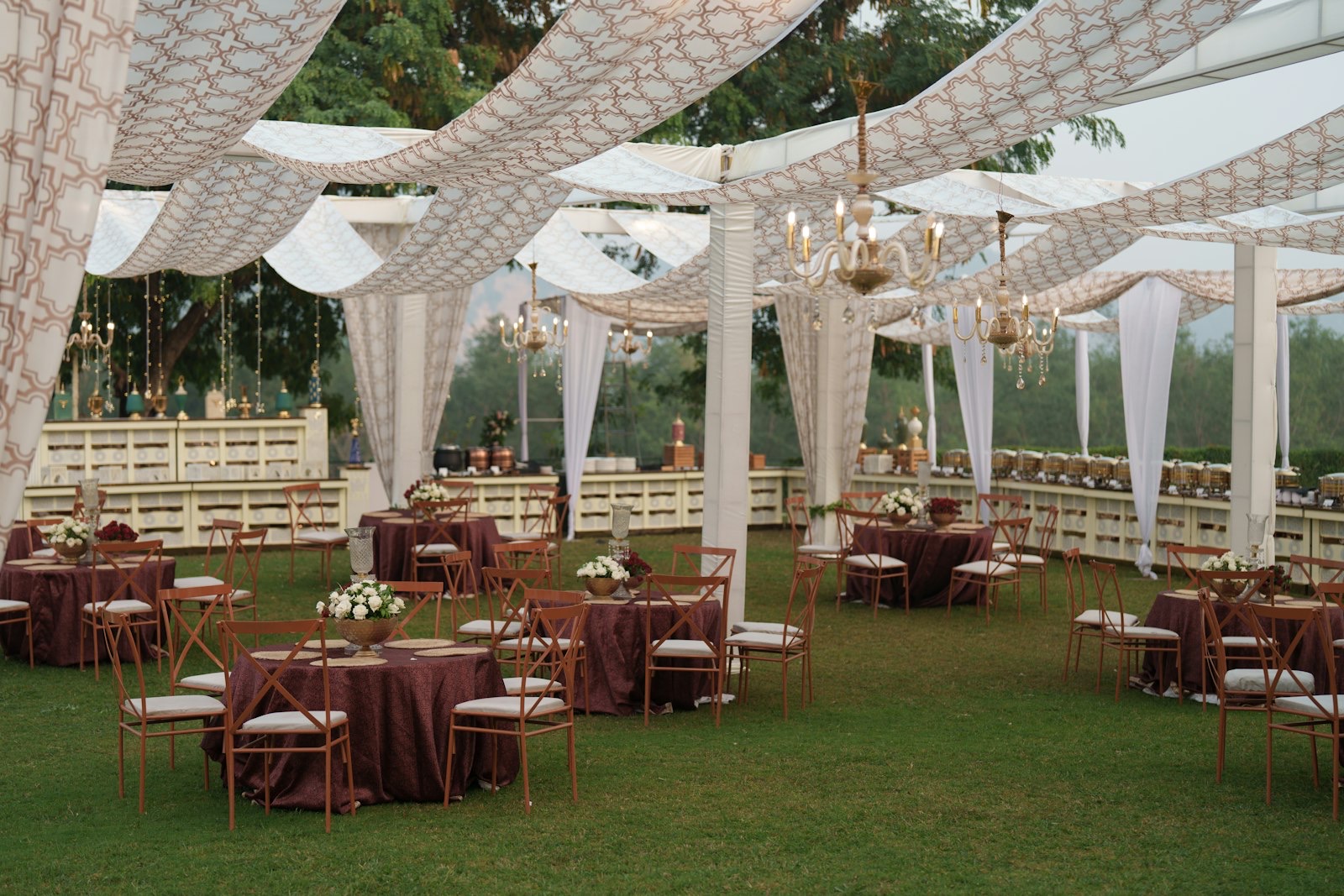
A weather plan is not a backup you hide until the last minute. Decide which conditions would change the ceremony, meal, clothing, transport or guest communication; ask the venue what is actually available; and choose a clear decision-maker and decision time. The goal is comfort and safety, not preserving one exact picture.
“Bad weather” is too vague to plan around. Think through heat, sun, rain, wind, cold, mud, smoke, insects and sudden changes in light. Each can affect people differently. A dry but very hot afternoon may call for water, shade and a shorter ceremony; light rain may be manageable if people have cover and safe paths; wind may affect signs, paper, flame and sound.
Start with the parts of the day that occur outdoors and list what each one needs. A ceremony needs a place for guests to sit or stand, a route in, a way to hear, and space for participants. A meal needs stable surfaces, food service that works in the conditions, light as the day changes and access to restrooms. A cocktail hour may be easier to move or shorten than a ceremony. Breaking the day into pieces makes the response more specific.
Ask the people closest to you about real comfort needs. Consider mobility, pregnancy, infants, older adults, medications, sensory sensitivity, formal clothing, cultural practices and the distance from parking or shelter. You do not need to announce every private concern. You do need to make a plan that does not assume everyone experiences the weather the same way.
During a venue visit, walk the alternative spaces rather than merely hearing that there is “a backup.” Ask where people would enter, how much time a change takes, what furniture or equipment can move, how many people the space can hold in the alternative layout, and whether the backup is available for your whole event window. A covered area may be useful for a brief shower but not for a full meal.
Ask about surfaces and routes. A garden path, lawn, deck or gravel area can feel different after rain or in heels, with a wheelchair, stroller, mobility aid or formal shoes. Find out where guests can wait under cover and where deliveries, performers or caterers would go if the layout changes. A plan that works only for the couple is not yet a guest plan.
Request the relevant details in writing. This may be a floor plan, rain policy, rental list, setup cutoff or venue contact protocol. If your provider suggests a tent, heater, fan, flooring, umbrellas or additional lighting, ask what it does and does not solve. Do not assume an item is reserved, permitted or included until it is documented in the appropriate agreement.
Choose the person or small group that decides whether to switch plans. This should not be an open-ended group chat on the morning of the wedding. The decision makers need the venue contact, schedule, relevant provider contacts and permission to choose within boundaries you set. If one person feels strongly about staying outside, agree in advance what conditions would override that preference.
Set an approximate decision point with the venue and relevant providers. Some changes require hours for setup, staffing, food service, seating or transport. Others can happen closer to the event. The exact timing will depend on the location and agreement, so ask rather than copying a rule from another wedding. Write down who needs to be told once the decision is made.
Prepare two short guest messages in advance: one for the original plan and one for a change. Include only what guests need to know—location, arrival route, footwear or layer guidance if useful, and whether an activity is moving or delayed. A clear update is better than a cheerful but vague reassurance.
A strong weather plan begins before a forecast appears. Offer water where guests will wait, identify shade or shelter, and leave time for people to move at a reasonable pace. Make seating and paths usable for the people you expect. If the day will run from afternoon into evening, consider changing temperatures and light rather than designing only for the ceremony hour.
Let clothing and styling choices support the setting. Layers, secure footwear, an accessible route and a place to set down bags can be more helpful than a perfect visual match. If guests need to know about grass, gravel, stairs or a long walk, say so in the invitation details or event information. Useful advance information helps people come prepared without making the weather the focus.
If you must change course, frame it as hosting well. Moving indoors, shortening a ceremony or adjusting the timeline is not a failure of planning. It is the plan working for actual conditions and actual people.
Source notes
This is an original service guide based on editorial planning judgment. It makes no specific climate, safety or venue-policy claim and therefore has no inline citation. See `SOURCE-LEDGER.md` for the deterministic source mapping and method record.